You are now reading:
Vietnam’s International Financial Centre - Connecting regional capital flows with real economy development
you are in UOB Explore
You are now reading:
Vietnam’s International Financial Centre - Connecting regional capital flows with real economy development
At the Third High-Quality Development Forum of Chinese Business Associations in Vietnam*, more than 300 delegates from government agencies, consulates and regional business communities gathered to discuss new directions for investment and economic cooperation in Vietnam.
During the subsection on the development of Ho Chi Minh City’s International Financial Centre (IFC), Mr. Lim Dyi Chang, Country Head of Commercial Banking, UOB Vietnam, shared his strategic perspective on the role of finance in linking regional capital flows with Vietnam’s real economy.
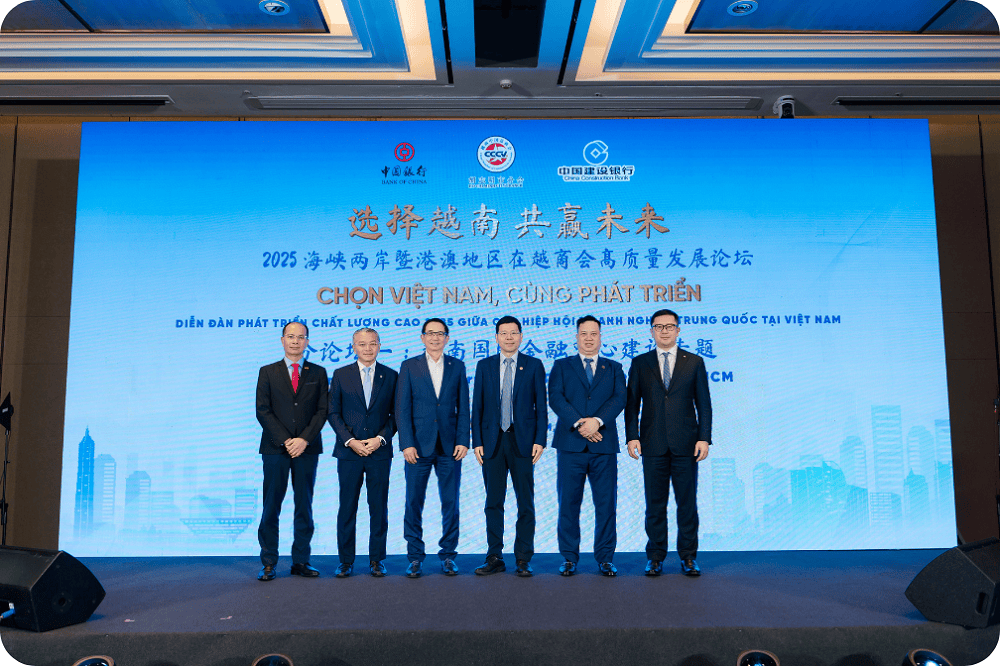
Mr. Victor Ngo, CEO of UOB Vietnam (third from left); Mr. Lim Dyi Chang (second from left); and Mr. Chuong Lam, Chairman of the Ho Chi Minh City Chapter of the Chinese Business Association in Vietnam (fourth from left), together with key speakers at the Third High-Quality Development Forum of Chinese Business Associations in Vietnam
According to Mr Lim, Ho Chi Minh City’s vision of becoming a modern, technology-driven and globally connected financial centre is steadily taking shape. Recent national policy developments and the city’s coordinated roadmap reflect a strong shift from aspiration to execution.
He highlighted three critical elements in policy planning: transparency to build investor confidence, consistency to sustain long-term growth, and public-private partnership (PPP) to drive innovation and implementation efficiency.
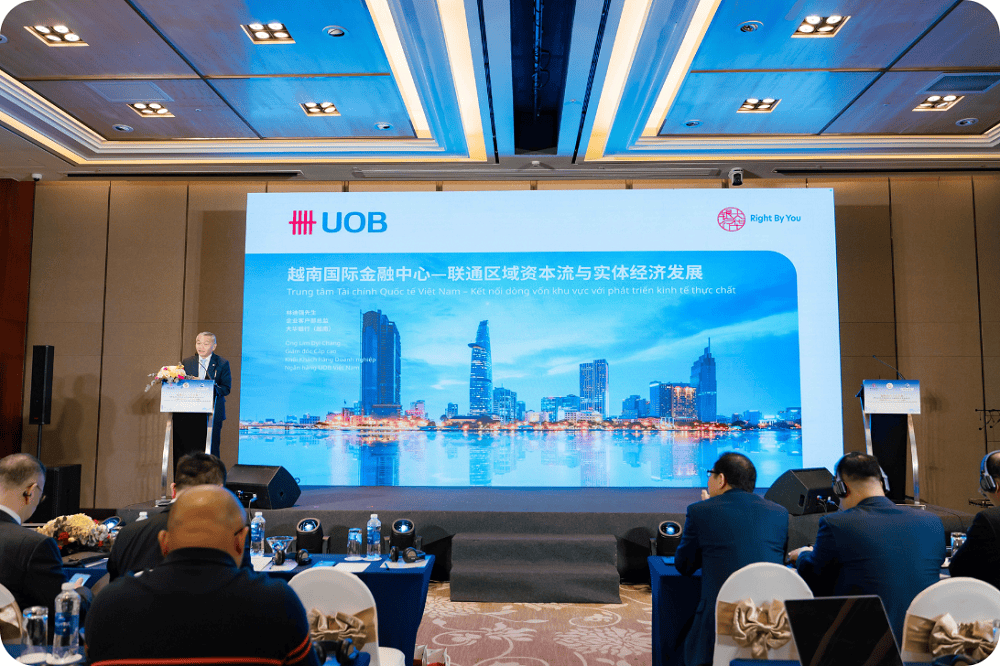
Mr. Lim shares his thought leadership insights on the topic “Vietnam’s International Financial Centre: Connecting regional capital flows with real-economy development”
“These are the essential conditions for a financial centre to establish lasting credibility. Vietnam is steadily enhancing its governance framework, introducing fintech sandboxes, and setting up one-stop administrative mechanisms - clear signs of determination to improve the investment environment”, he said.
In the latest Global Financial Centres Index, Ho Chi Minh City rose three ranks to 95th, surpassing Bangkok and joining the list of the “centres to watch”. This is a positive signal that Vietnam’s momentum is underpinned by trust and tangible progress.
UOB views the development of Ho Chi Minh City’s IFC not only as a milestone for Vietnam, but also as part of a broader ASEAN financial integration, where economies are becoming increasingly connected through digitalisation and sustainability.
For any IFC to thrive, it must rest on strong enablers - infrastructure, energy, logistics, digitalisation and talent. Vietnam is making notable advances across all these areas, from renewable-energy corridors along the central coast to logistics networks linking ports and industrial parks, and nationwide 5G and data centre development.
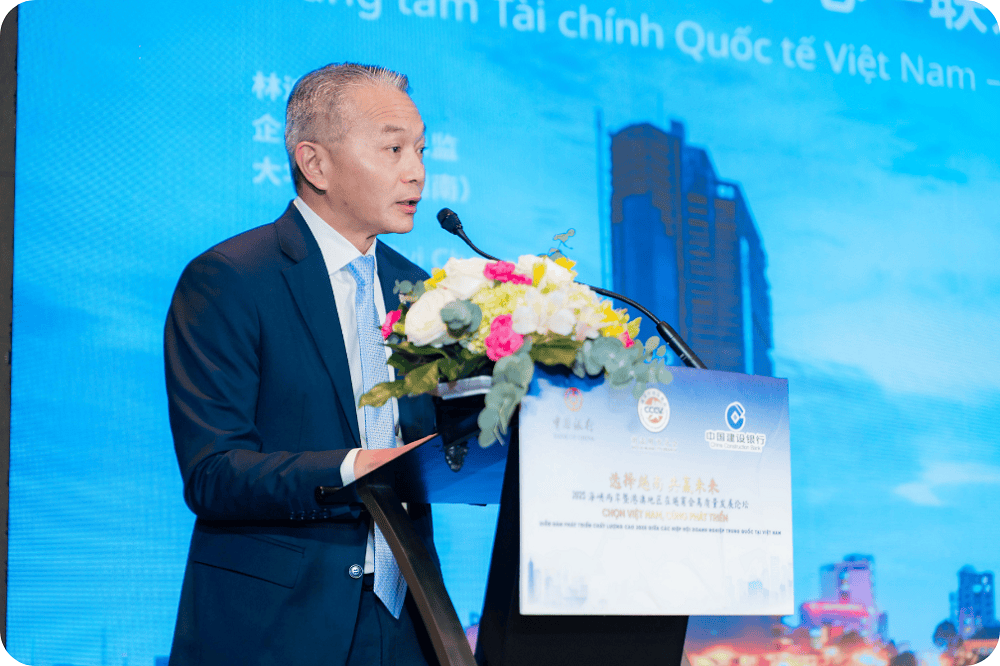
“Finance plays a central role in this journey - not merely as funding for individual projects, but as the connective layer linking capital, technology and sustainability”, Mr Lim emphasised.
Through integrated platforms such as UOB Infinity, UOB enables businesses in Vietnam and across the region to manage cross-border cash flows, optimise working capital and strengthen supply chain connectivity. At the same time, UOB’s Green Finance frameworks support clients in aligning capital flows with sustainability goals, forming an integrated ecosystem that connects finance, infrastructure and sustainable development.
From a regional perspective, Mr. Lim noted that UOB has supported more than 1,600 Chinese enterprises in expanding across ASEAN since 2011. With 11 FDI Advisory Centres across the region and a network of China Desks in key markets, UOB serves as a strategic bridge linking China’s scale with ASEAN’s opportunities.
According to the UOB Gateway to ASEAN 2025 paper, 45 per cent of companies investing in ASEAN are building local supply chains, while 70 per cent expect banks to help manage cross-border financial and trade complexities. This reflects the rising need for financial partners with deep connectivity and advisory capabilities.
In Vietnam, UOB’s charter capital now stands at VND 10 trillion, alongside the planned development of its new headquarters in Ho Chi Minh City - a reflection of UOB’s long-term commitment and confidence in the market’s growth potential.
Concluding his remarks, Mr. Lim stated: “Building an international financial centre is not only about economic ambition, but also about fostering trust, transparency and partnership. These are the same values that guide UOB’s relationships with clients and communities”.
As ‘One Bank for ASEAN’, UOB continues to connect regional capital flows, support businesses in unlocking growth opportunities, and reinforce Vietnam’s position as a trusted partner in regional value creation.
*The High-Quality Development Forum 2025, themed “Choosing Vietnam, Growing Together”, was co-organised by Bank of China (Ho Chi Minh City Branch), the China Chamber of Commerce in Vietnam (CCVA), and China Construction Bank. Attendees included Mr. Duong Lap, Consul General of the People’s Republic of China in Ho Chi Minh City; Ms. Tran Thi Hai Yen, Director of the Centre for Investment Promotion, Information and Support in the South; Mr. Truong Thanh Xuan, Deputy Head of Operations Division, Customs Department Region II of Ho Chi Minh City; Mr. Zhao Zongquan, Chairman of the CCVA; and Ms. Liu Fangzhou, Honorary Chair of the Forum of Chinese Business Associations in Vietnam.
25 Nov 2025 • 4 minutes read

25 Nov 2025 • 4 mins read

11 Sep 2025 • 4 mins read